
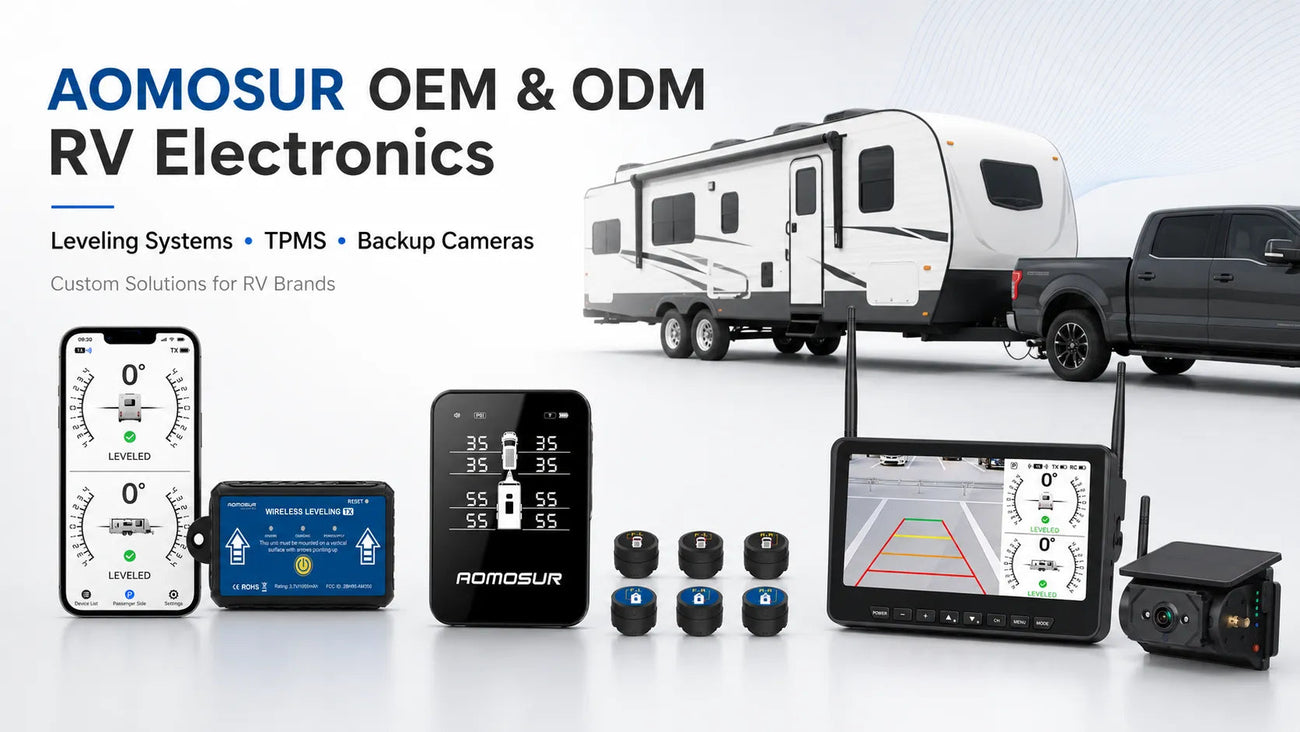
The difference between a successful RV electronics program and a costly product launch often appears before the first prototype. Clear requirements, realistic validation and a documented support plan matter more than a long feature list. This guide outlines the questions brands, distributors and RV manufacturers should resolve with a potential OEM or ODM partner.
OEM, ODM and private label are not the same
In an OEM project, the buyer usually defines more of the specification and the supplier manufactures to that requirement. In an ODM project, an existing platform is adapted through hardware, firmware, interface, packaging or accessories. Private label normally involves the least technical change. Real projects often combine elements of all three.
Start with the application, not the catalog
- RV class, trailer length and expected installation location.
- Target market, languages, units and regulatory requirements.
- Environmental exposure: vibration, temperature, water and dust.
- Power source, duty cycle and service-access constraints.
- Dealer installation time and customer skill level.
- Expected order volume, spare-parts horizon and launch schedule.
Evaluate the complete signal path
For wireless cameras, sensors and displays, bench range alone is not enough. The partner should discuss antennas, installation surfaces, vehicle materials, interference and what happens when data is temporarily lost. Ask how the system communicates a fault to the driver.
Prototype around real installation conditions
A useful prototype plan includes representative cables, brackets, fasteners and packaging—not only the electronic core. Test the product on the intended RV type, at expected distances, with other onboard electronics active. Record acceptance criteria before testing starts.
Quality questions worth asking
- How are incoming components and completed assemblies inspected?
- Which environmental and life tests match the intended application?
- How are firmware versions, revisions and calibration data controlled?
- What traceability is available for production batches?
- How are failures analyzed and corrective actions communicated?
Plan after-sales support before packaging
Agree on manuals, setup videos, troubleshooting steps, replacement parts, warranty responsibilities and response times. Clear labeling of model, serial or batch information makes support faster. Packaging should protect the product and help the installer confirm that every required component is present.
Choose for the full product life cycle
The lowest initial quotation may not be the lowest total cost. Compare engineering responsiveness, validation discipline, production consistency and service readiness. A strong partner makes requirements clearer, exposes risks early and helps the product remain supportable after launch.
Start a project through AOMOSUR For Business or Contact Us.